
08:00–10:00
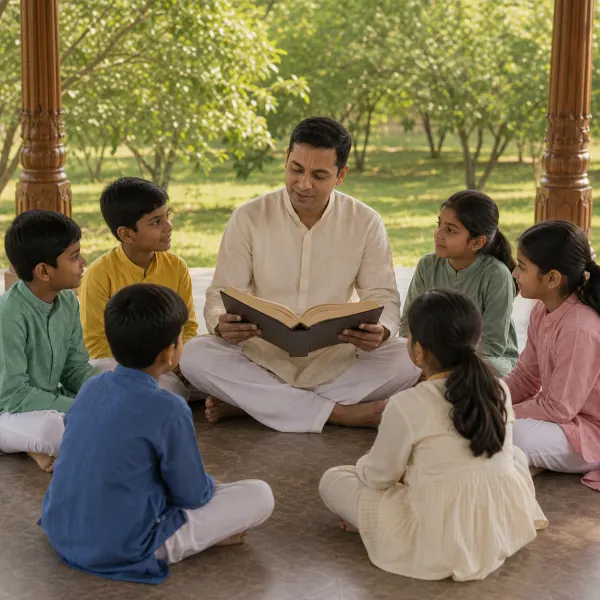
Vedic education
Two hours of spiritual practice—including prayers, japa, classes on Vedic scriptures, śloka recitation, and more—begin each day, cultivating calmness, discipline and focus.
Curriculum
The day begins with Vedic education, gives its largest block to NCERT academics, and closes with two hours of Kreeda and the arts.
Classes 1–5 follow a full-day rhythm in which Vedic education comes first, NCERT academics receive the largest block, and two hours of Kreeda and the arts complete the day.
Pre-primary · 08:00–12:00
A separate shorter day.
Classes 1–5 · 08:00–17:00
The three-part full-day rhythm shown below.
08:00–10:00
Two hours of spiritual practice—including prayers, japa, classes on Vedic scriptures, śloka recitation, and more—begin each day, cultivating calmness, discipline and focus.
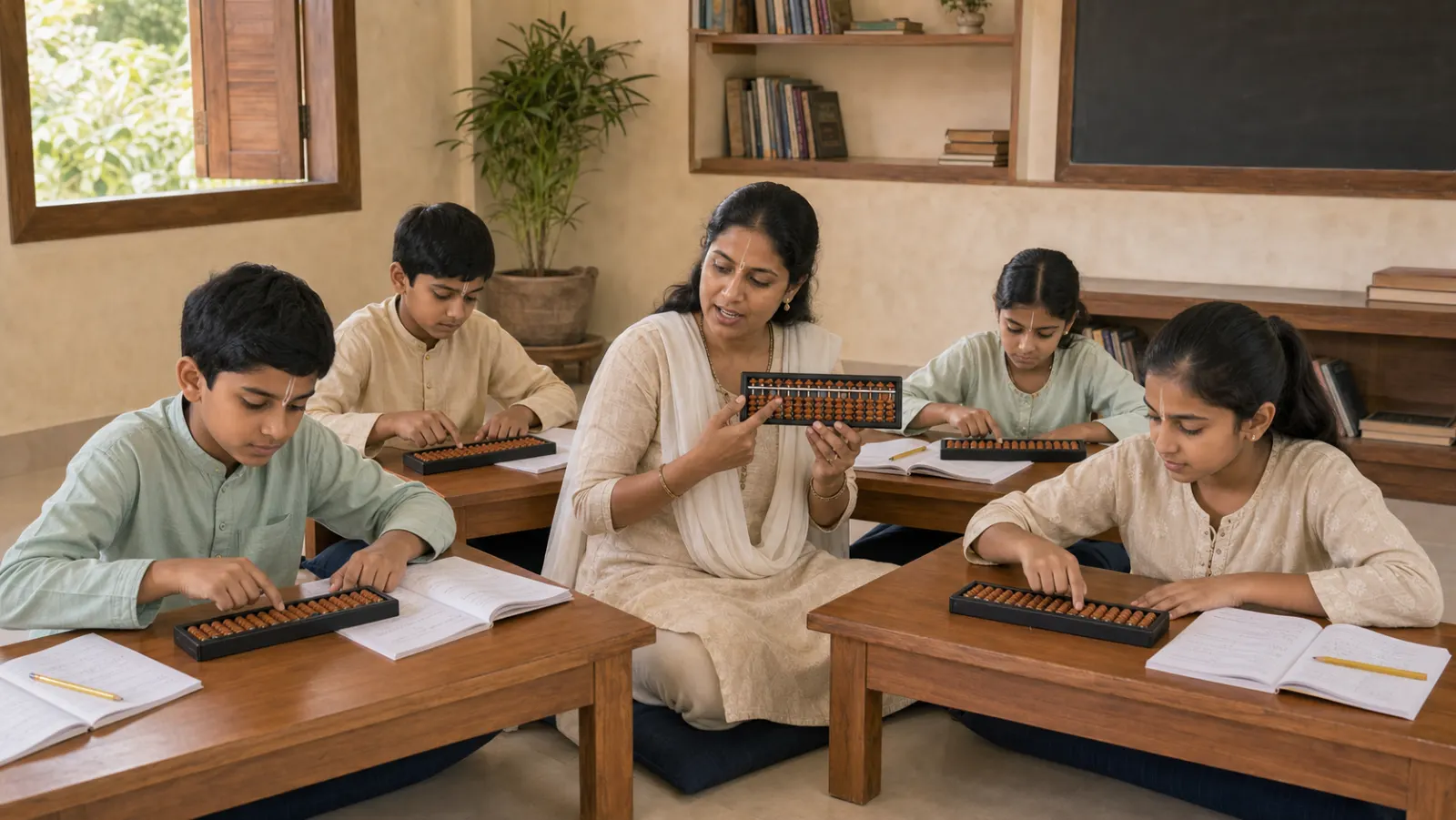
10:00–15:00
Five focused hours of NCERT learning that transforms concepts into understanding through visual projects, 3D models, and hands-on experiences—not rote learning.

15:00–17:00
Two hours bring the day to a close through movement, creativity, and self-expression—Kreeda and skills such as Sangeet, Nritya, and Kala, nurturing both body and mind.
The curriculum sets out what children learn; the teaching method ensures those ideas become clear, connected, and usable.
Lessons are designed to help children understand ideas and reason through them, with memorisation supporting learning rather than replacing it.
NCERT concepts are taught through visual projects and 3D models so children can see, build, discuss, and explain what they learn.
Academically qualified devotee teachers guide both the Vedic portion and NCERT academics, connecting subject knowledge with lived character.
Our program completely covers the official NCERT syllabus defined by the government, matching the high academic standard of mainstream schools. Alongside regular subjects, we blend culture, physical mastery, and life skills to give your child an unmatched, well-rounded edge for the future.
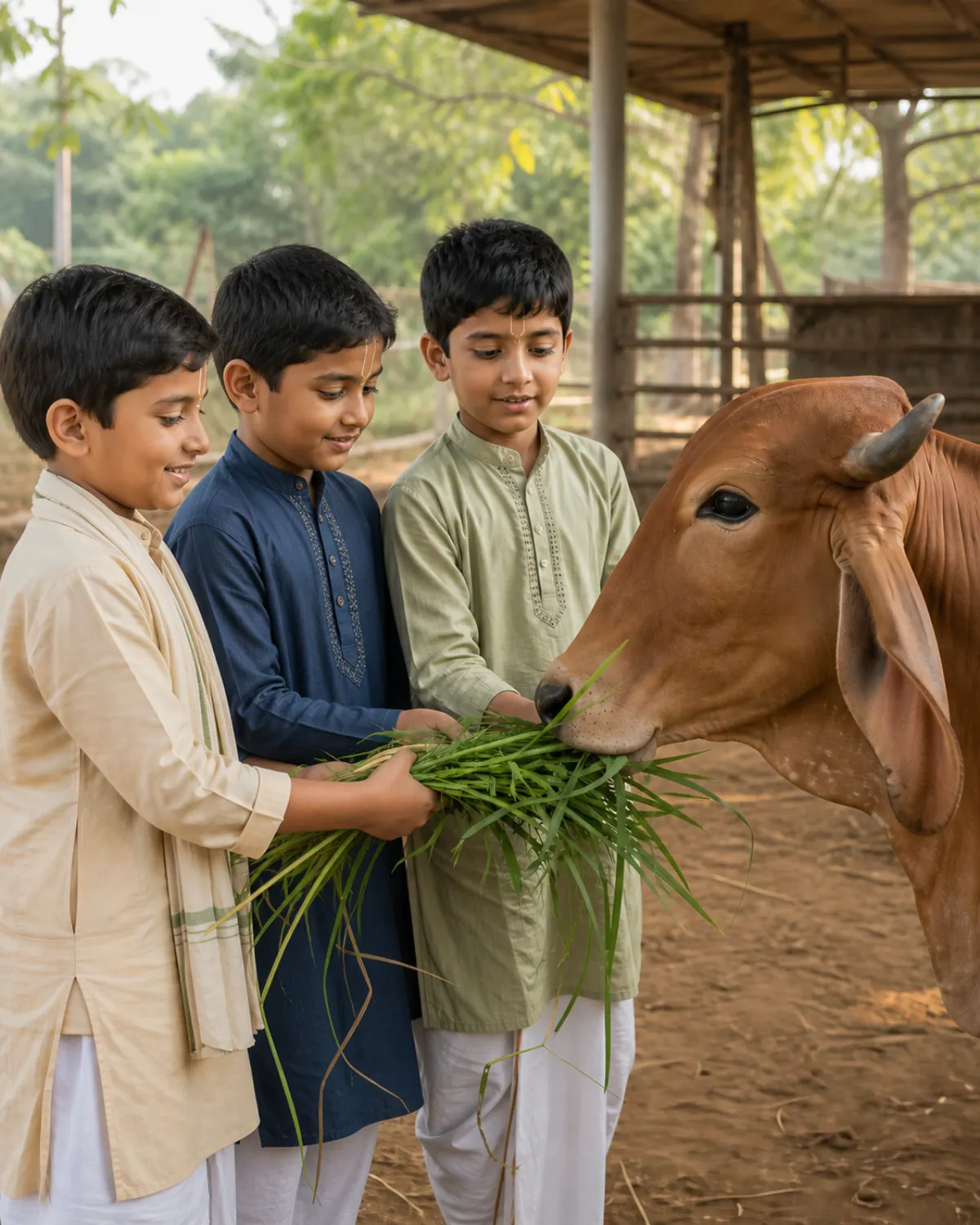
Beyond books: weekly hands-on learning
Every week, children swap textbooks for hands-on tools. Dedicated entirely to experiential learning, this day immerses students in practical arts like carpentry, pottery, science projects, textile crafts, and agricultural care. By creating and experimenting with their own hands, they develop tangible life skills, creative resilience, and deep real-world understanding that no standard classroom can provide.
Held off campus at a dedicated space, where every craft has the room, tools, and materials it needs.
First batch · June 2027
The admission process includes a Gurukulam orientation where families can understand the model, followed by an interview in which parents can ask their questions.