
 01
01Rooted in Vedic learning
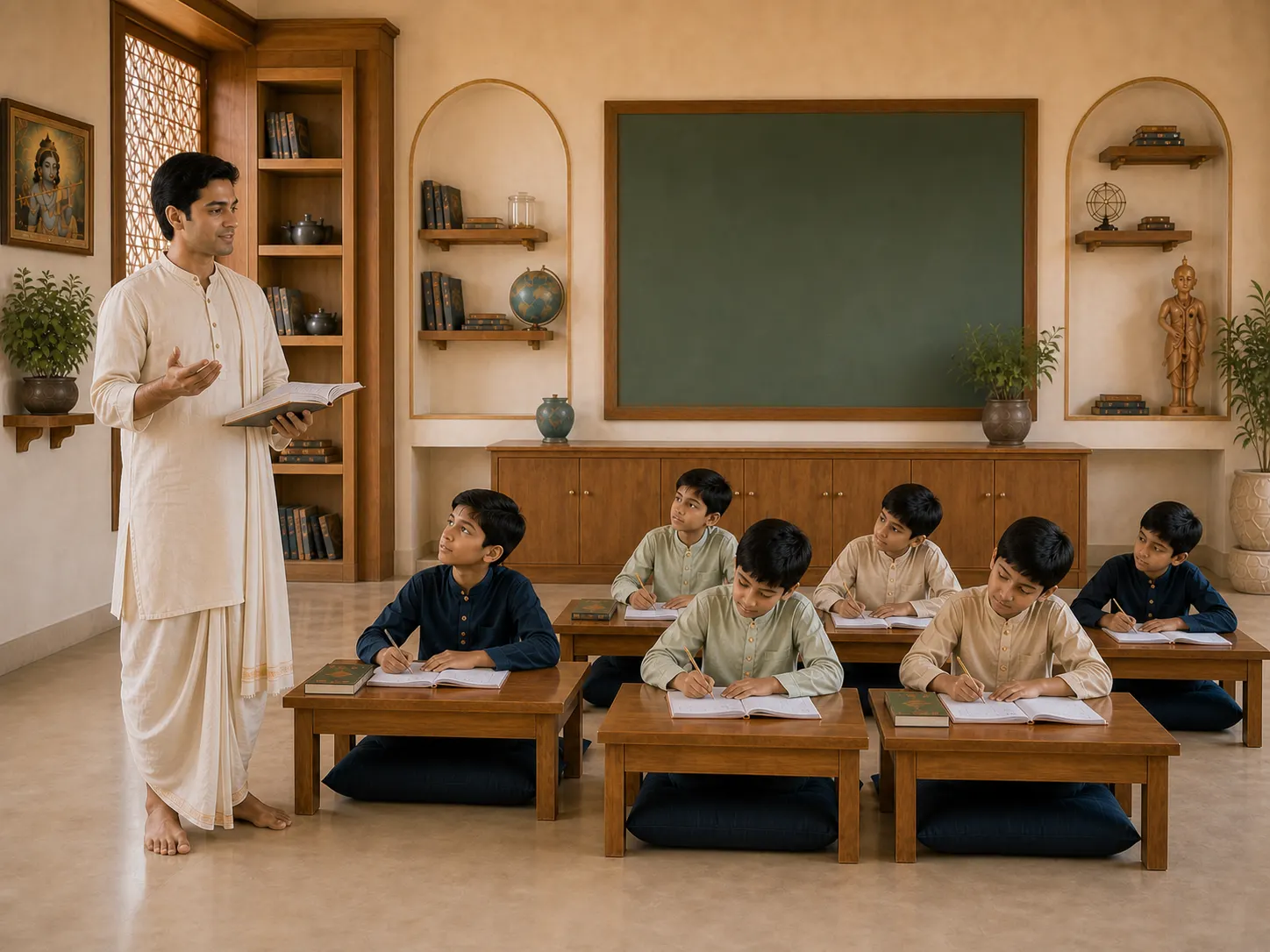
Vedic education, sadhana, scriptures, spiritual culture, and devotional practice provide a grounding for the child's education.
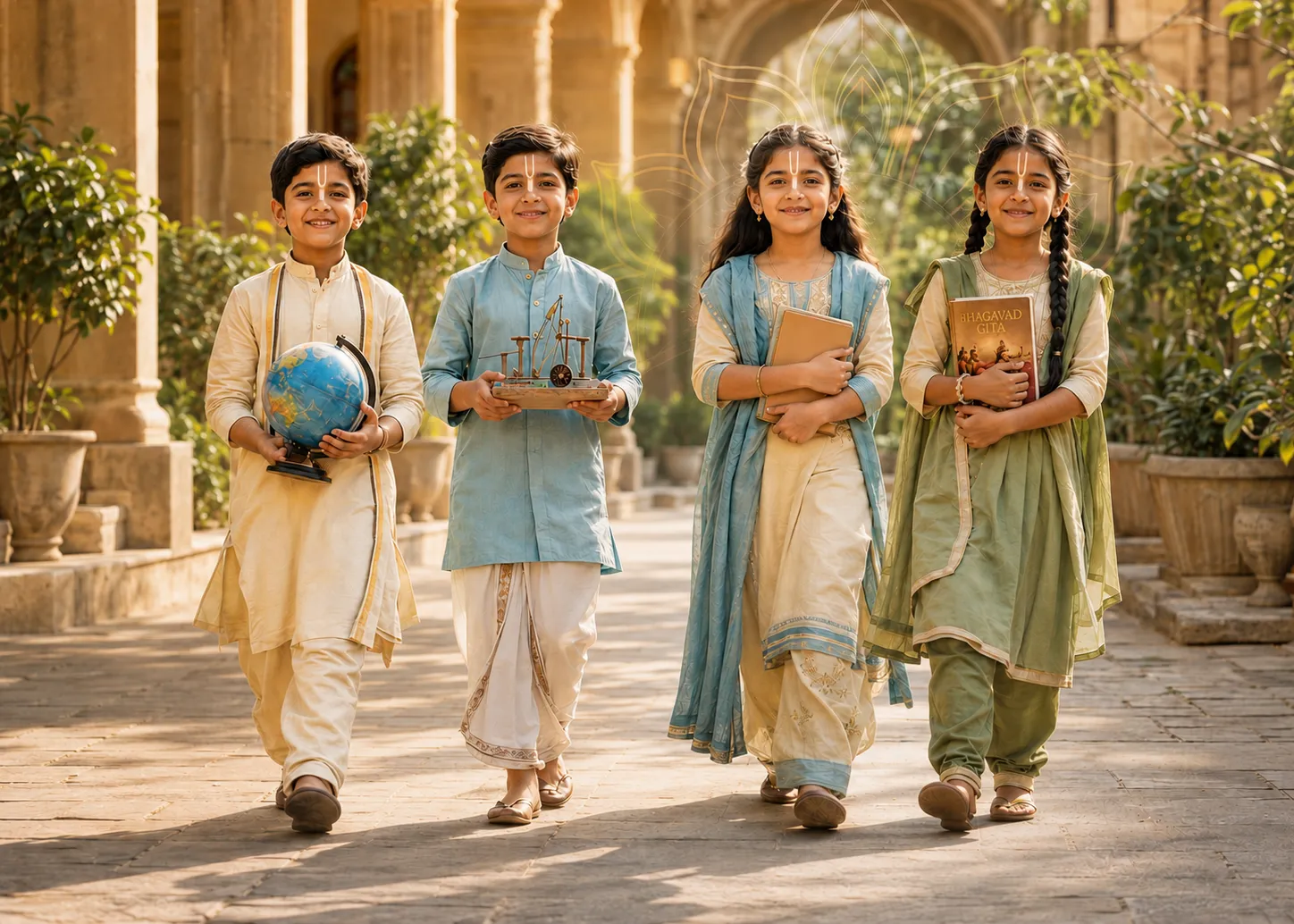
Give your child a complete education.
Get your child enrolled at a new English-medium GSEB day school in Vadodara, from Nursery to Class 5.
School
Day school
Board
GSEB
Medium
English
Opening
June 2027
Classes
Nursery–Class 5
Location
Vadodara
Spiritual culture, sustained academics, and the whole development of the child belong in the same school day.
01Vedic education, sadhana, scriptures, spiritual culture, and devotional practice provide a grounding for the child's education.
 02
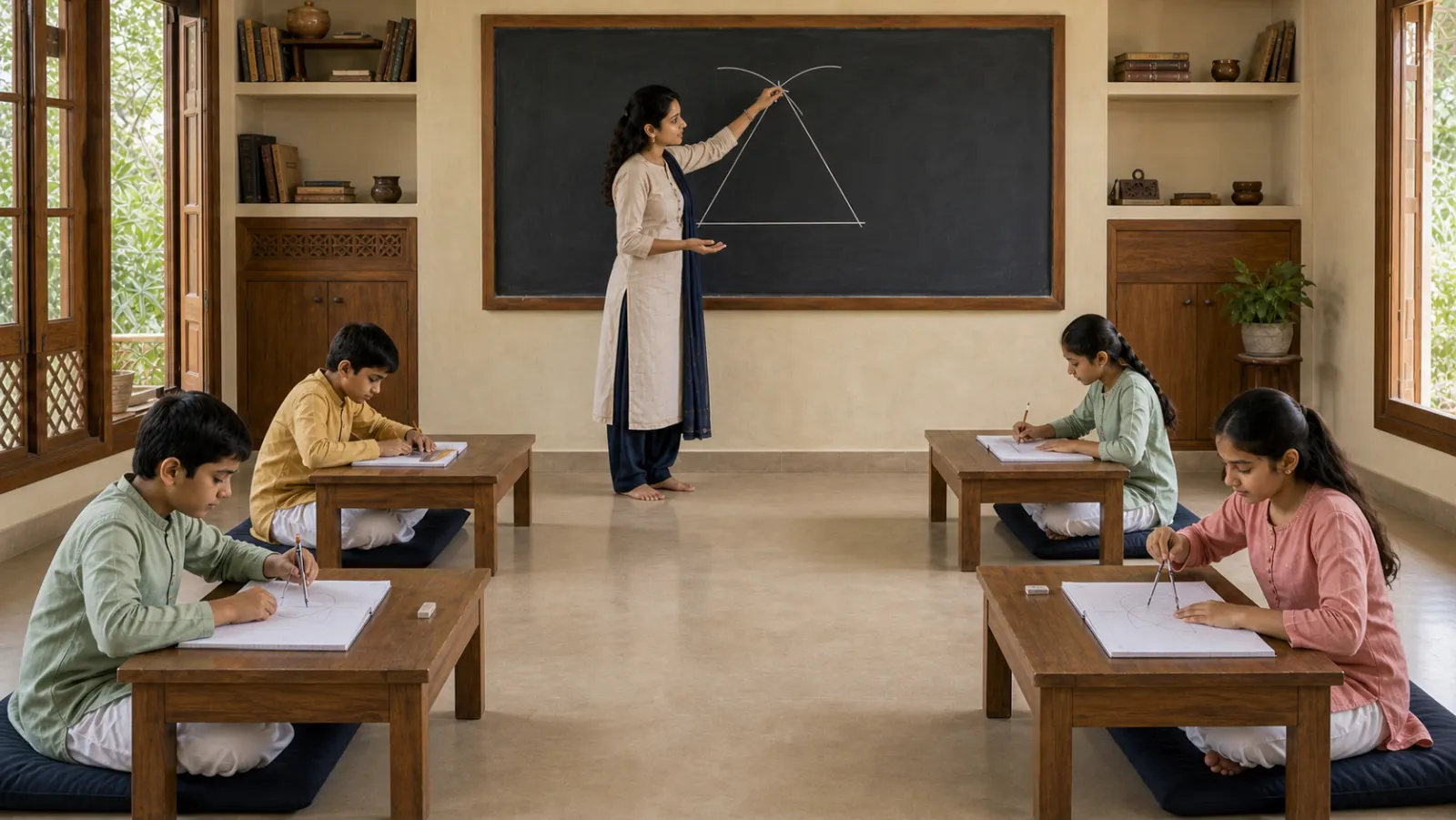
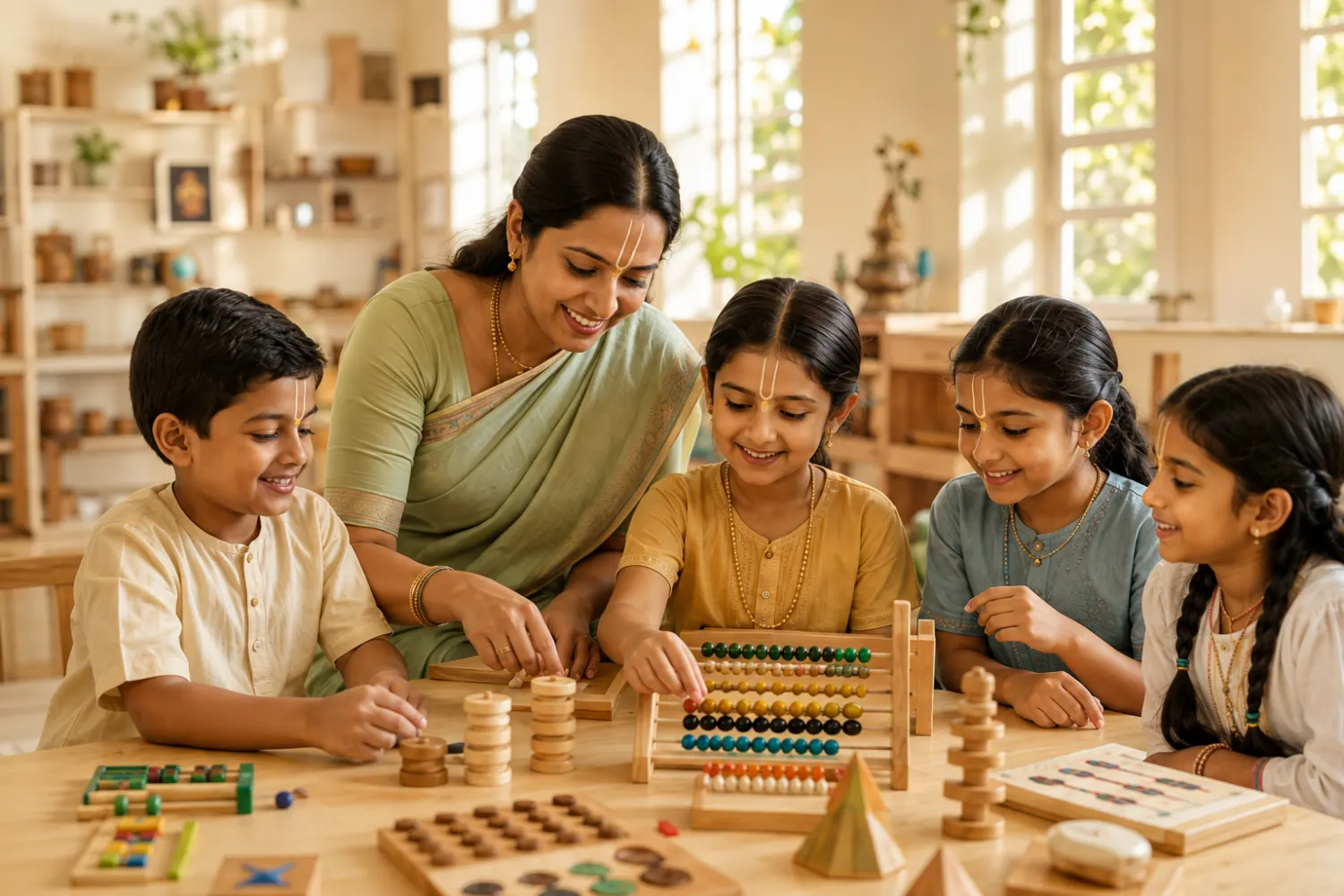
02For Classes 1–5, five hours each day are dedicated to NCERT academics taught for understanding through visual projects and 3D models.
 03
03Pancha Kosha Vikas brings the body, energy, mind, intellect, and bliss into one coherent education.
Classes 1–5 follow a full-day rhythm in which Vedic education comes first, NCERT academics receive the largest block, and two hours of Kreeda and the arts complete the day.
Pre-primary · 08:00–12:00
A separate shorter day.
Classes 1–5 · 08:00–17:00
The three-part full-day rhythm shown below.
08:00–10:00
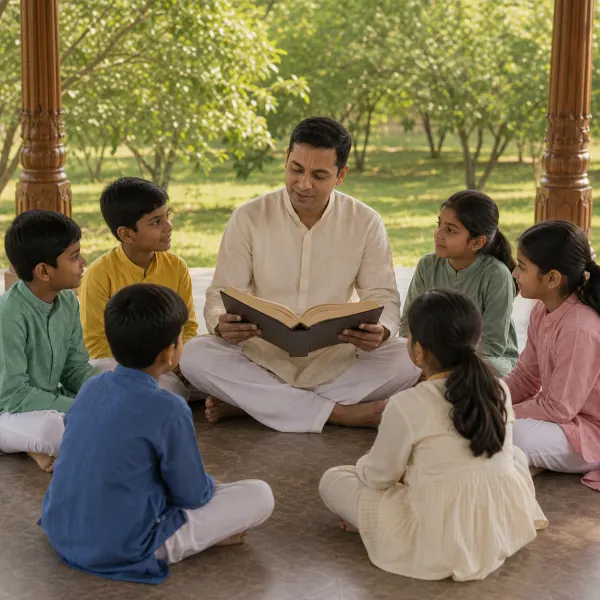
Two hours of spiritual practice—including prayers, japa, classes on Vedic scriptures, śloka recitation, and more—begin each day, cultivating calmness, discipline and focus.
10:00–15:00
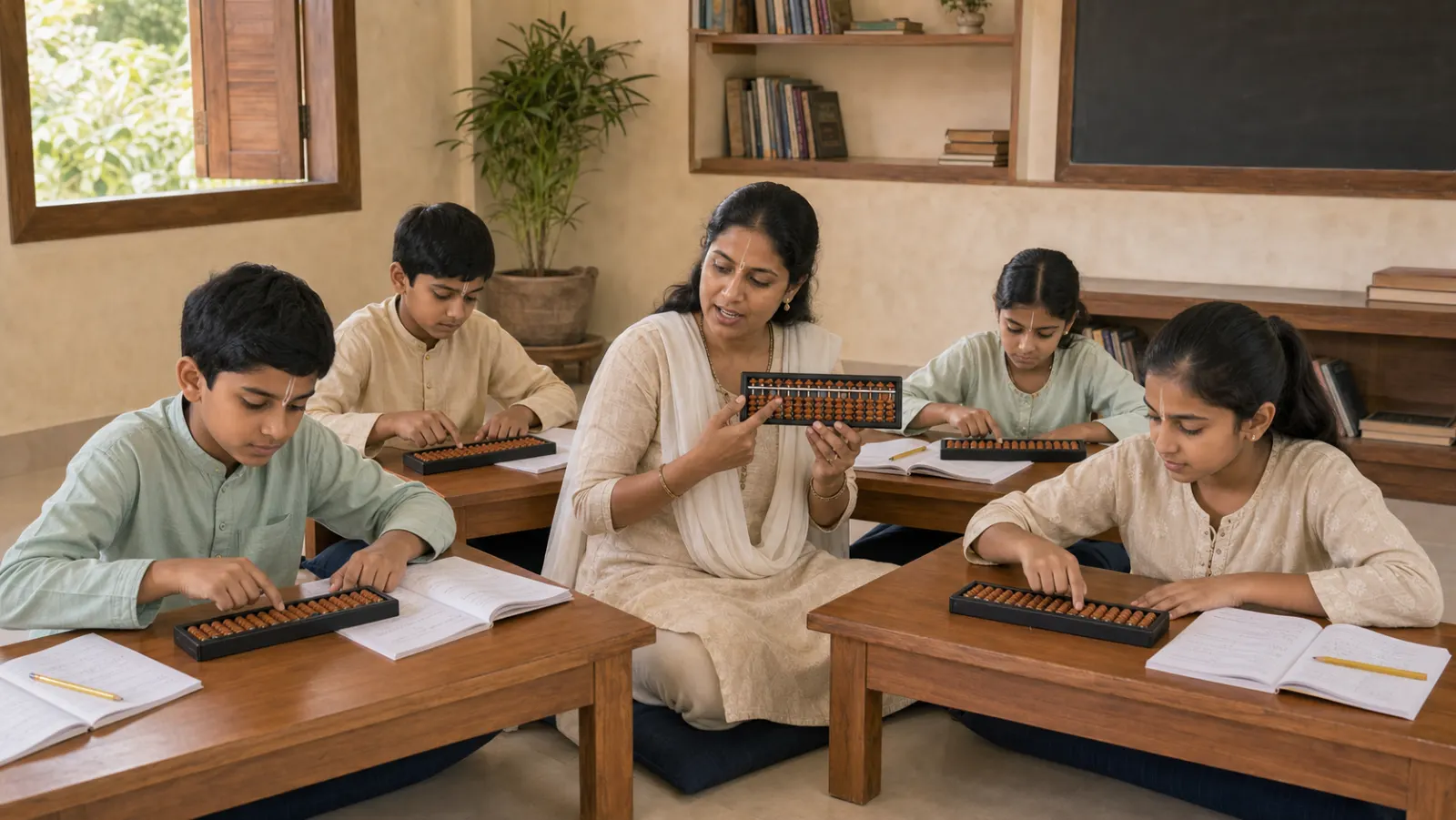
Five focused hours of NCERT learning that transforms concepts into understanding through visual projects, 3D models, and hands-on experiences—not rote learning.

15:00–17:00
Two hours bring the day to a close through movement, creativity, and self-expression—Kreeda and skills such as Sangeet, Nritya, and Kala, nurturing both body and mind.
The Gurukulam's organising framework connects every dimension to the subjects, practices, and rhythm of school life.
Annamaya
Body
Kreeda, Martial Arts, Gross Motor Activities, Fine Motor Activities
Pranamaya
Energy
Yoga, Pranayam, Vedic Dincharya
Manomaya
Mind
Sangeet, Nritya, Kala
Vijnanamaya
Intellect
Academics, Vedic Scriptures
Anandamaya
Bliss
Sadhana, Seva, Kirtan
The 30 qualities of a human being is stated by Nārada Muni in the Śrīmad-Bhāgavatam (Canto 7, Chapter 11, Verses 8–12). According to the scripture, cultivating these foundational characteristics is essential to satisfy the Supreme Lord and live a civilized human life.
Beyond books: weekly hands-on learning
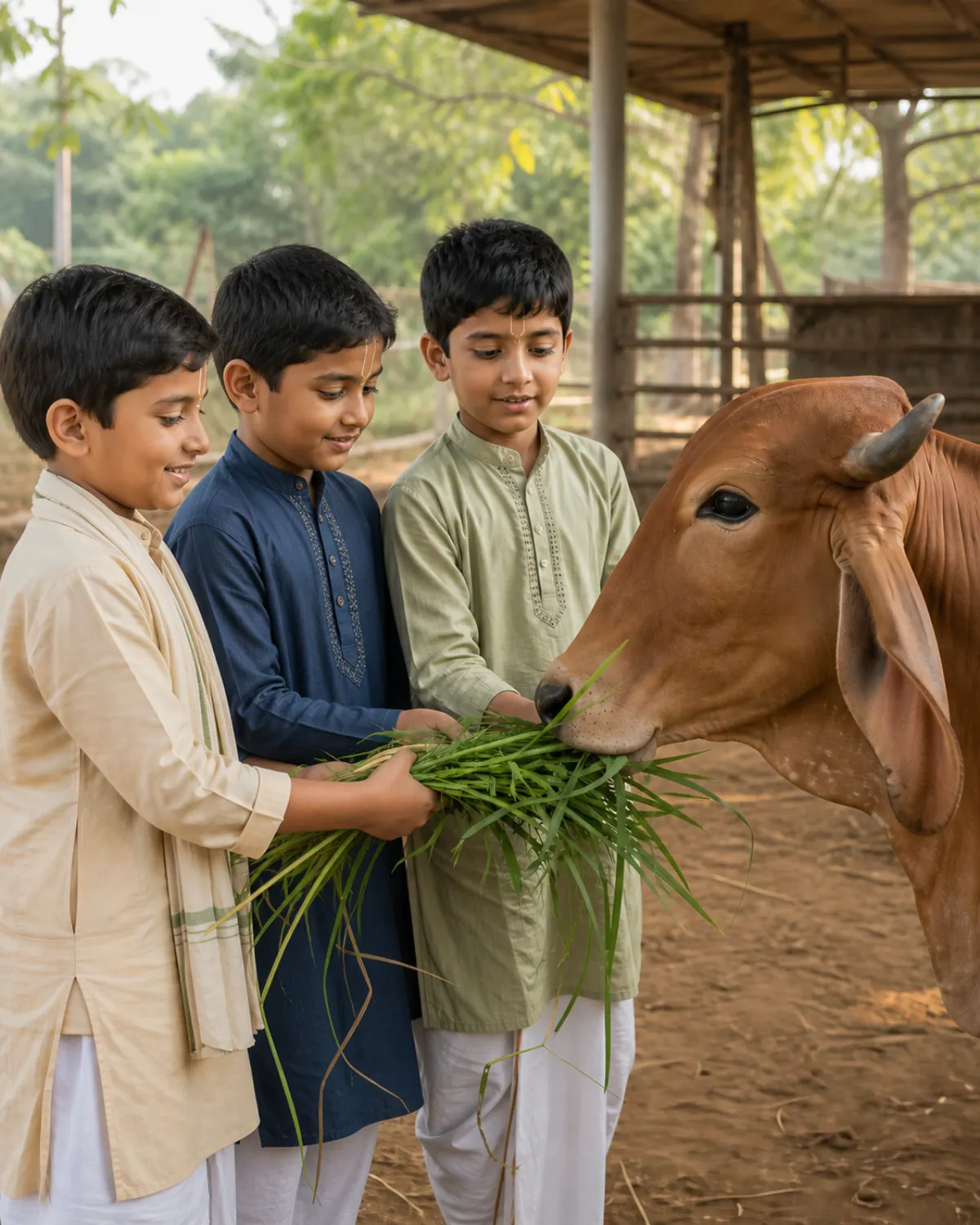
Every week, children swap textbooks for hands-on tools. Dedicated entirely to experiential learning, this day immerses students in practical arts like carpentry, pottery, science projects, textile crafts, and agricultural care. By creating and experimenting with their own hands, they develop tangible life skills, creative resilience, and deep real-world understanding that no standard classroom can provide.
Held off campus at a dedicated space, where every craft has the room, tools, and materials it needs.
Our program completely covers the official NCERT syllabus defined by the government, matching the high academic standard of mainstream schools. Alongside regular subjects, we blend culture, physical mastery, and life skills to give your child an unmatched, well-rounded edge for the future.
Admissions, structure, academics, fees and facilities — answered in brief, exactly as they appear in the Parent Handbook.
Still considering the fit?
The Gurukulam orientation is where families can understand the model, and the parent interview that follows is the place to ask questions specific to their child.
Read the full Parent Handbook (opens in a new tab)The people behind the Gurukulam
Around 300
children our founding team teaches today
Our founding team teaches around 300 children through Chaitanya Bal Sankar Kendra, a separately managed initiative they have run for five years and continue to run today across seven centres in Vadodara.
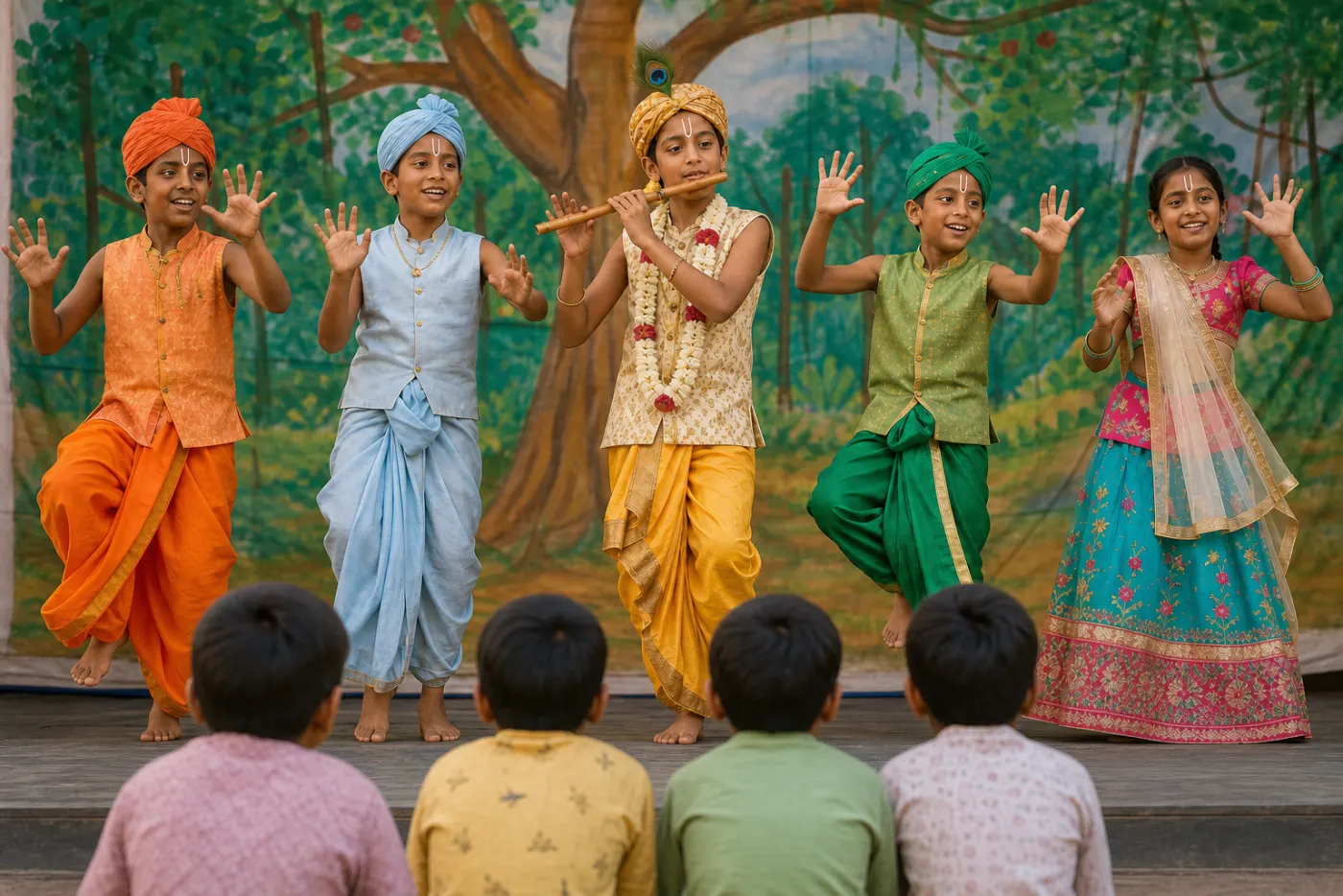
Admissions are open from Nursery through Class 5 from the academic year 2027-28.
Complete the Gurukulam application form.
Attend the Gurukulam orientation session.
An interaction & briefing with the parents.
An assessment of the child.
Enrollment in gurukulam.
First batch · June 2027
Admission enquiries are open for Nursery through Class 5.
Prefer to talk? +91 95125 12600