
Annamaya
Body
Kreeda, Martial Arts, Gross Motor Activities, Fine Motor Activities
Our Approach
The Gurukulam brings body, energy, mind, intellect, and inner fulfilment into one coherent educational framework.
The Gurukulam's organising framework connects every dimension to the subjects, practices, and rhythm of school life.
Annamaya
Body
Kreeda, Martial Arts, Gross Motor Activities, Fine Motor Activities
Pranamaya
Energy
Yoga, Pranayam, Vedic Dincharya
Manomaya
Mind
Sangeet, Nritya, Kala
Vijnanamaya
Intellect
Academics, Vedic Scriptures
Anandamaya
Bliss
Sadhana, Seva, Kirtan
Character is not treated as a separate lesson. It is reinforced through the rhythm, responsibilities, and relationships of school life.
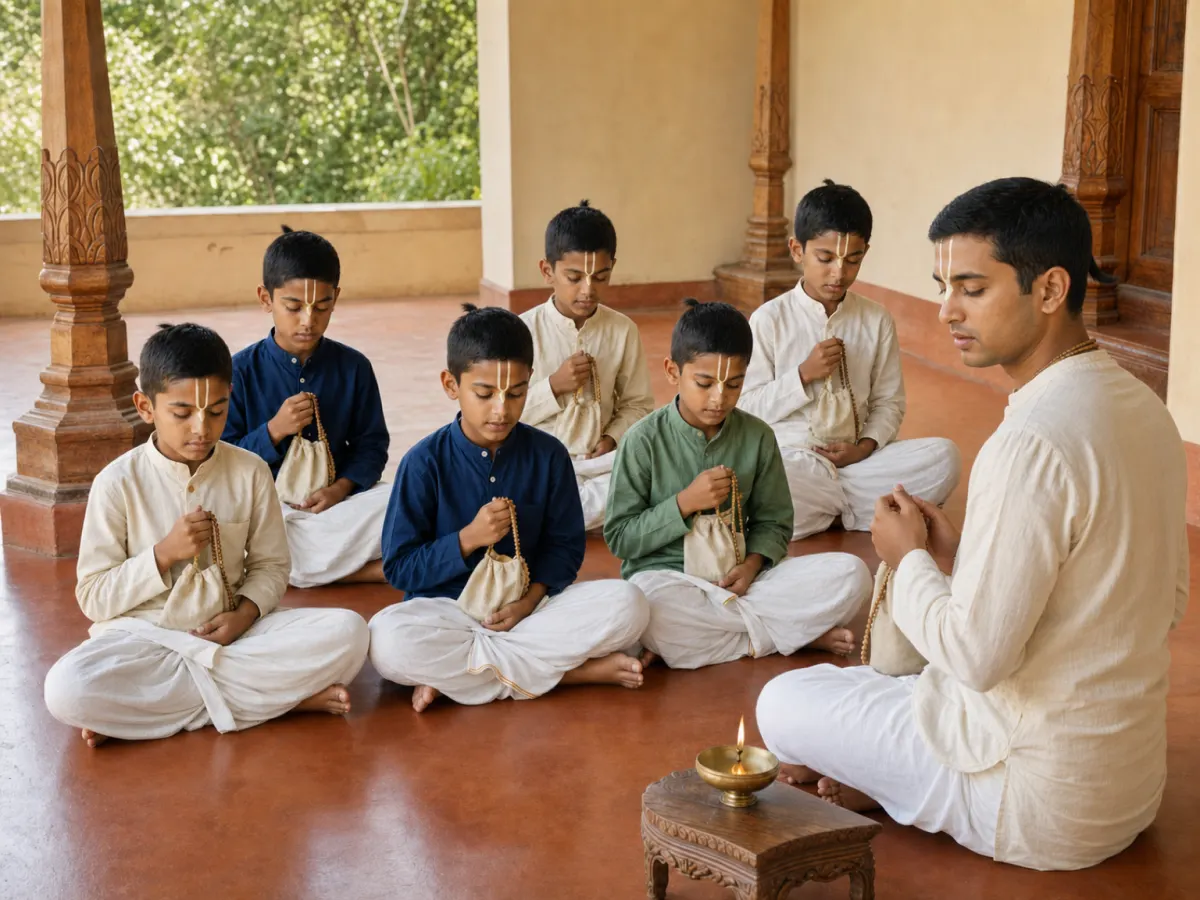 01
01The day begins with spiritual practice, giving children a grounded and attentive rhythm.
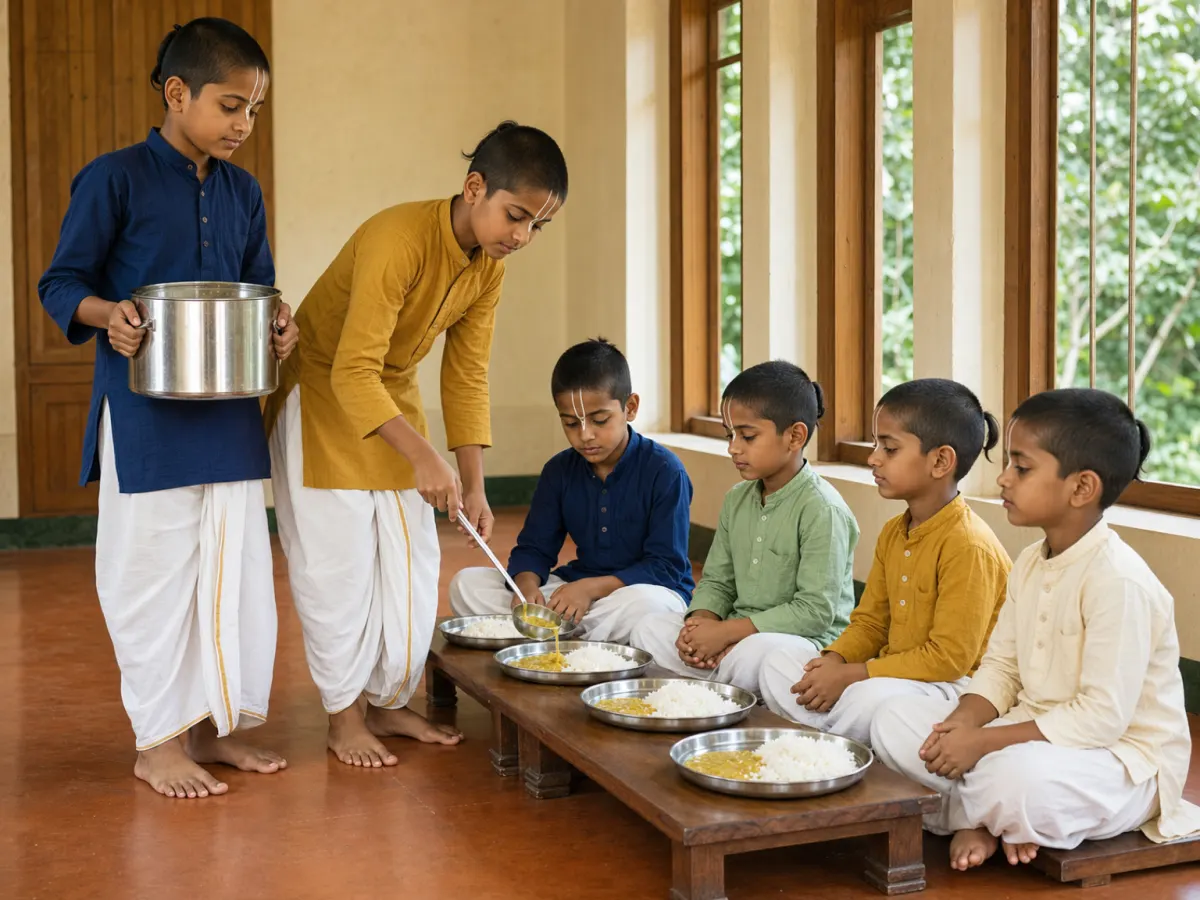 02
02Service is learned through participation, responsibility, and care for others.
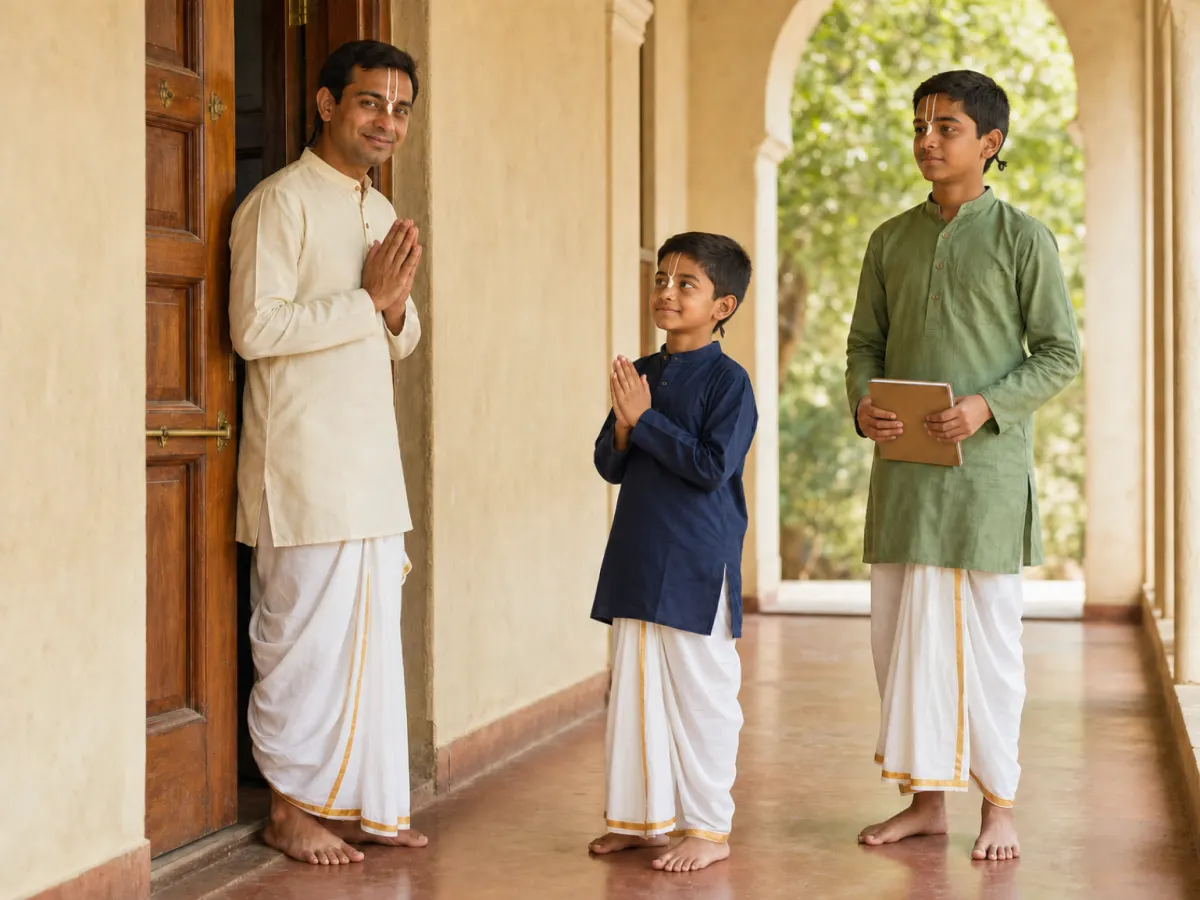 03
03Good conduct is cultivated as a lived daily practice alongside academic learning.
The 30 qualities of a human being is stated by Nārada Muni in the Śrīmad-Bhāgavatam (Canto 7, Chapter 11, Verses 8–12). According to the scripture, cultivating these foundational characteristics is essential to satisfy the Supreme Lord and live a civilized human life.
First batch · June 2027
Explore the timetable, academic subjects, cultural learning, and weekly practical service that make the approach tangible.